
Lately, one of Ella’s PCOS patients had her first period back, after one year’s amenorrhea.
Here are some facts about PCOS, the resources are from National Health Service, Mayo Clinic, and Southern Cross Medical Library.
Symptoms
Not all women with PCOS will have all of the symptoms, and each symptom can vary from mild to severe. Common symptoms of PCOS include:
- Irregular periods
- Excess androgen
- Weight gain
- Acne and oily skin
- Excess hair growth on the face and body
- Thinning hair and hair loss from the head
- Infertility
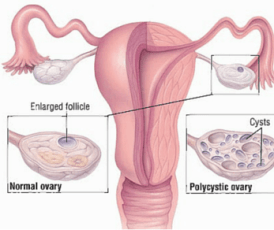
- Ultrasound Scan shows that ovaries become enlarged and contain numerous small fluid-filled sacs which surround the eggs.
Causes
The exact cause of polycystic ovary syndrome (PCOS) is unknown, it is though that the following factors may play a role:
- Hormone imbalance, e.g. raised levels of testosterone, luteinising hormone (LH), prolactin, or low levels of sex hormone-binding globulin (SHBG), made by the ovary itself or in other glands, or in the part of the brain that controls their production.
- Resistance to insulin. Excess insulin.
- Genetics, although specific genes associated with the condition haven’t yet been identified.
Diagnosis
There’s no specific test to definitively diagnose polycystic ovary syndrome. The diagnosis is one of exclusion, which means your doctor considers all of your signs and symptoms and then rules out other possible disorders. Physical exam, pelvic exam, blood tests, and ultrasound scan may be performed to help the diagnosis.
Management
Polycystic ovary syndrome (PCOS) can’t be cured, but the symptoms can be managed. Weight loss through a low-calorie diet combined with moderate exercise activities is usually the first step. Medications may be used to help regulate the period, promote ovulation, reduce excessive hair growth, and support fertility. Metformin is sometimes prescribed in some countries but isn’t licensed for treating PCOS in the UK.
 meholisticcare.co.nz